
brainblog for VergeIO by Eric Newcomer
Continuously evolving regulations, competitive pressures, and the increasing use of generative AI makes protecting and controlling access to computing resources more important than ever.
Private clouds are an attractive way to achieve data sovereignty and guard against data leakage, but it isn’t as simple as implementing data protections. Many additional facets have to be taken into account for any regulatory compliant design and deployment.
First of all, feature and capability compromise should not be on the table. A private cloud solution for sovereign infrastructure can deliver ironclad security, seamless scalability, and predictable costs as well as inherent privacy and integrity.
You have to not only protect PII, PHI, and sensitive citizen data against breaches and unwanted disclosures, you also have to protect data processed by AI workloads, ensure the data never leaves jurisdictional boundaries, and remains compliant with local data protection laws, which can vary widely.
What does a sovereign infrastructure do?
More than sixty countries have enacted some form of data localization requirement, eighteen of which enforce strict requirements to maintain data within national borders. Another fourty-four enforce rules that only allow cross-border data transfers within specific legal conditions.
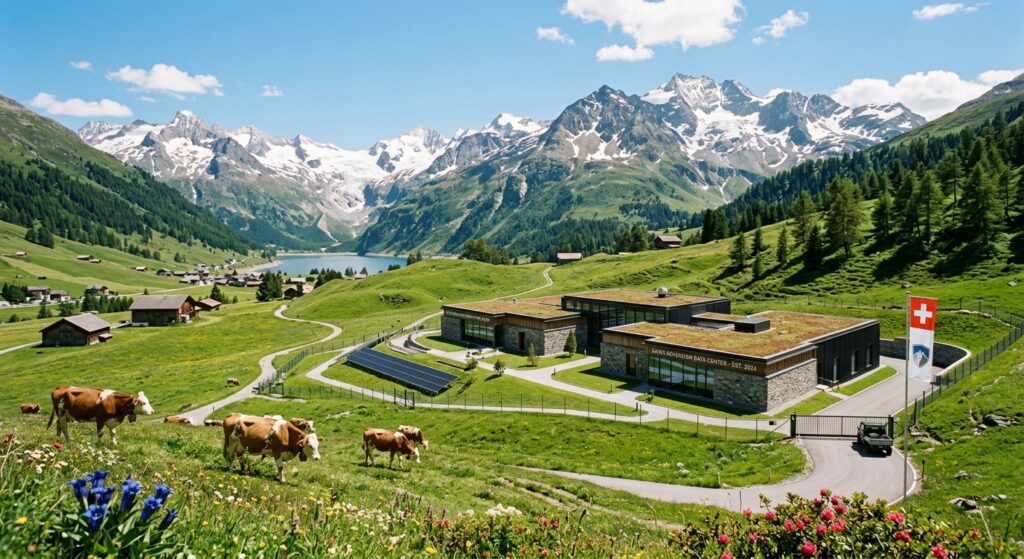
Creating a sovereign data center involves designing, building, and operating infrastructure that guarantees physical, legal, and operational data control strictly within a specific national jurisdiction.
The scope of such privacy requirements is not limited to data storage, but also extends to data processing, data transmission, access controls to prevent illegal disclosures, and establishing strict authorization policies over who can access what data.
A sovereign data center that meets these requirements typically must be located within national borders and ensure all data managed and stored within that facility complies with local regulations, such as the EU’s GDPR, Switzerland’s FAPD, or Brazil’s LGPD. In some cases strict data access controls can be established to allow access outside the borders, but again the laws must be followed.
Data privacy regulations typically also mandate operational controls such as breach reporting within a designated time period and appointing a data protection officer accountable to the government for compliance.
A primary consideration for investing in and operating sovereign private cloud infrastructure is establishing the right level of regulatory control over your infrastructure and data at a reasonable price point, while still meeting necessary service levels of performance, scalability, and reliability.
How to Create a Sovereign Data Center
The technology you need for a sovereign data center should be capable of handling the entire infrastructure challenge, not just the data privacy and operational aspects, but also the application level processing, security, and network access control. It needs to be easy to set up, maintain, and update. It should be easy for applications to access the resources they need.
Consider the following aspects:
- Start with modular facilities that support localized cooling, backup power, and multi-stack hardware architectures capable of local component updates.
- Require air-gap isolation (disconnecting critical systems from the public internet) or strict network segmentation for security.
- Choose infrastructure for encryption key ownership such as bring-your-own-key (BYOK) or hold-your-own-key (HYOK) models to prevent wiretapping and protect data.
- Request compliance certifications relevant to the region (such as ISO/IEC 27001, SOC 2, FedRAMP, or C5) and run continuous readiness and audit assessments.
- Set Up a Sovereignty Operations Center for real-time monitoring and logging to track data egress, detect unauthorized access attempts, and enforce compliance dashboards.
Ensure PII, PHI, and sensitive citizen data processed by AI workloads never leaves jurisdictional boundaries and remains compliant with local data protection laws
Keep complete visibility and command over every AI workload, from deployment to inference, with no external party able to access, influence, or interrupt your AI workflows
How VergeIO Addresses Sovereign Infrastructure Requirements
By flattening the traditional infrastructure stack (collapsing hypervisor compute, storage, networking, and data protection into one single codebase), VergeIO enables governments, enterprises, and Managed Service Providers (MSPs) to establish complete, localized data sovereignty without relying on public cloud vendors or costly, locked-in legacy hypervisors.
VergeIO sovereign infrastructure refers to the deployment of sovereign private clouds, secure enclaves, and independent IT environments using VergeOS, VergeIO’s single-codebase private cloud operating system.
Consider the following facets of what VergeOS provides:
1. Complete On-Premises Control
VergeOS runs on standard x86 commodity hardware and abstracts the application layer from the hardware, ensuring organizations are never locked in and can reuse mixed hardware to ensure long-term utilization of their stack.
Organizations use the OS to maintain data, configurations, and administrative boundaries within geographic borders of private facilities, preventing external “kill switches” or political disruptions associated with public clouds.
2. Turnkey Private & Sovereign AI (VergeIQ)
VergeIQ integrates AI capabilities natively into the infrastructure layer.
Industries with strict compliance mandates (such as healthcare or defense) can process proprietary data and process AI inferencing on local GPUs, eliminating public cloud AI APIs and maintaining strict corporate or national information security.
3. Virtual Air-Gap Multi-Tenancy (Virtual Data Centers)
VergeOS uses an architecture called Virtual Data Centers (VDCs) that permit organizations to provision isolated, secure sub-environments (tenants).
Data protection is supported by immutable and structurally distinct snapshots, defending against ransomware attacks by allowing administrators to restore compromised environments instantly.
4. The “VMware Alternative” Facet
Rather than integrating multiple point products (e.g., separate hypervisors, vSAN, and firewalls), a single VergeOS license includes all functionalities at a reasonable cost.
You can migrate from VMware quickly and with low risk, significantly lower infrastructure costs, and future-proof your data center.
5. The Distributed Data Center Facet
Organizations that operate across multiple jurisdictions, or that run edge locations alongside a core data center, will need to ensure that every site keeps its data within its own borders while still adhering to the same regulations.
You can run the sameVergeOS codebase at every location, from a large core data center to a small edge site, consistently managing the entire operation while data, replication, and administrative boundaries stay within the jurisdiction each site serves.
The VergeOS private cloud solution integrates five critical infrastructure capabilities into a single OS that runs on your existing servers (i.e. virtualization, data protection, storage, automation, and networking).
The Intellyx Take
Geopolitical shifts and increasing data privacy sovereignty regulations put unprecedented pressure on cloud strategies. Navigating and meeting sovereignty mandates is critical.
Digital sovereignty isn’t just a good idea. It means establishing greater control over data and systems to reduce risks and limit potential IT system disruption.
Private clouds are a good way to achieve infrastructure sovereignty for modern workloads, including AI. Applications on private infrastructure need to meet demanding performance, scalability, and security requirements in line with what public clouds offer.
VergeOS offers an economical and flexible way to design and deploy private clouds with the capabilities you need, without sacrificing functionality and flexibility.
Copyright ©2026 Intellyx B.V. At the time of writing, VergeIO is an Intellyx customer. Intellyx retains final editorial control of this content. A human wrote every word of this article. Image credit: Google Gemini.