Intellyx Cortex by Jason English
 At this very moment, somewhere, there is probably a boss-type who is banging on a conference table, shouting to the room and into a conference phone: “Bring me more AI projects! The next person who suggests allocating budget for anything, even a pencil, that doesn’t have AI in it somewhere, is fired!”
Naturally, the executives will scurry out of the room, then blast out instructions to their managers that they had better start searching for AI solutions to all of the things that they used to do without AI.
Unfortunately their search for AI will land on an infinite number of results. Here’s a plan: go look at the websites of the stodgy old vendors that we already used from before AI, figure out what exactly we were doing with them, and then buy or build the AI that can do that.
Wait a minute – when you get to their websites, every single one of them is doing AI now! Not only that, every one of them claims to be some combination of the first, leading, easiest, best rated, and most powerful AI vendor in their space.
To figure it out, let’s hire someone who’s been on the leading edge of AI for 5-10 years. Lots of resumes say they did in the career site.
Uh-oh. AI is literally everywhere, and everyone’s doing it. It’s a no-win situation.
What is our hapless hierarchy going to do now?
How about we all stop saying AI at the same time?
If all of us made up our minds to stop saying AI, stop mentioning it, stop typing it, I think we could actually get out of this mess we’ve allowed ourselves to put ourselves in.
I’m serious. Don’t. Say. A. I. Ever. Again.
All of a sudden, we just won’t talk about it anymore. Then all the things that were AI-something, and the companies that were going to rebrand and put somethingAI at the end of their names, we can just call them whatever they were before.
Now, I’m not talking about AI going away. No, no, it’s way too late for that. We’re already soaking in it, and it will eventually consume something like half the energy output of the world.
Instead, we will simply assume every product company, application vendor or service provider that has somehow survived the last three years must already be doing AI by now, and since it is ubiquitous, we will be allowed to move on with our lives from there.
No more worrying about getting left behind by the competition because of AI. No more fear of missing out on the big AI party. Let’s start our own party.
Turn up the bass, and turn off the smoke machine. Relax, you’re breathing fine in here. After all, you can’t spell air without AI. Whoa.
Here’s why No-Say-AI is such a smooth move:
Now I know, there may be some blockers out there, who for some reason or another don’t like this idea. Maybe they invested a bazillion dollars in AI things, or maybe they just don’t like sanity, I don’t know.
But for the rest of everyone, here’s three irrefutable value pillars for handling objections and changing minds.
It wouldn’t cost anything extra. Except maybe marketing redoing all the booth signage which had AI printed on it in several places. Perhaps, you could stick a jalapeño mascot with googly eyes on there, and add a couple exclamation points. “¡AI! ¡AI! ¡AI!” Now you have an extra spicy booth.
It wouldn’t take a lot of effort on anyone’s part. In fact, it would save us at least two keystrokes per sentence, and no longer would we have to worry about grandma thinking it’s actually referencing A-1 steak sauce, or your cousin Al, who’s name looks exactly the same as AI in any sans-serif font.
It would make things easier to understand. An AI service would become a service, an AI app would become an app, and an automated AI workflow would become an RPA bot again. It would save us from having to figure out if the actual thing we’re talking about is AI-powered, or if it is the AI model itself, or some kind of autonomous AI agent.
Finally, we’ll be able to return to making architectural decisions based on whether the solution generates the intended results and business value, whether or not AI is involved in that process.
When do we start?
Why wait? We could stop saying AI starting now. Or, now. You go first.
I guess not everyone will receive this message at the same time.
Clearly, this is not just an event, this is a movement. And all serious movements need to start sometime. Just to get everyone excited about it, give them a chance to get on board this train, it would be better if we came up with a cool date where we all do this at the same time.
Dang it, 2-5-2025 already passed, that would have been really palindromic with all the squares. But hey, 10-15-2025 is still a mathematically interesting date coming up, that gives us plenty of time to get the word out. Hopefully the date or numbers don’t mean anything else.
This is it — 10.15.25: The Day of AI Ubiquity.
At exactly 10:15, on October 15, 2025, we can all just stop saying AI.
That’s all we have to do to free our discussions and minds.
In the next meeting, if there is another reason to have a meeting about the thing which shall no longer be named, everyone will sheepishly look away from whomever says it like they broke wind. The boss can’t fire everyone for not doing the thing, if nobody will even acknowledge that the thing the board told the boss to do even exists.
And we’ll all sing, “Bye, ¡AI! ¡AI! ¡AI!” as the buzz is killed.
What if some people stop stopping saying it?
Someone is bound to jump out of line and try to capitalize on the perceived absence of AI hype as an opportunity to gain market share. However, I’m not on board with any sort of organization or legislation to enforce this. That would make it easy for lobbyists and lawyers to go after it and ruin everything.
A social taboo, now that is much harder to squash.
Some well-meaning anonymous group could set up an AI Agent, er, agent, to tirelessly scour the world’s communications for instances of people unnecessarily using the letters on anything, and then spam their comments relentlessly with a GIF of the jalapeño mascot mocking them.
Vendors can retrain our copilots and search engines henceforth to use AD (artificial dumbness) algorithms to dumb down the offending communications for our analog brains. We’ll still be autonomous, no?
In the end, we’ll naturally lose interest, and 10-15-25 will become a day that is collectively forgotten about, just like Y2K, or this story I wrote, because our systems and agents will never need to mention it to us again.
And if you ask your assistant or handler what 10-15-25 means, they’ll tell you -30.
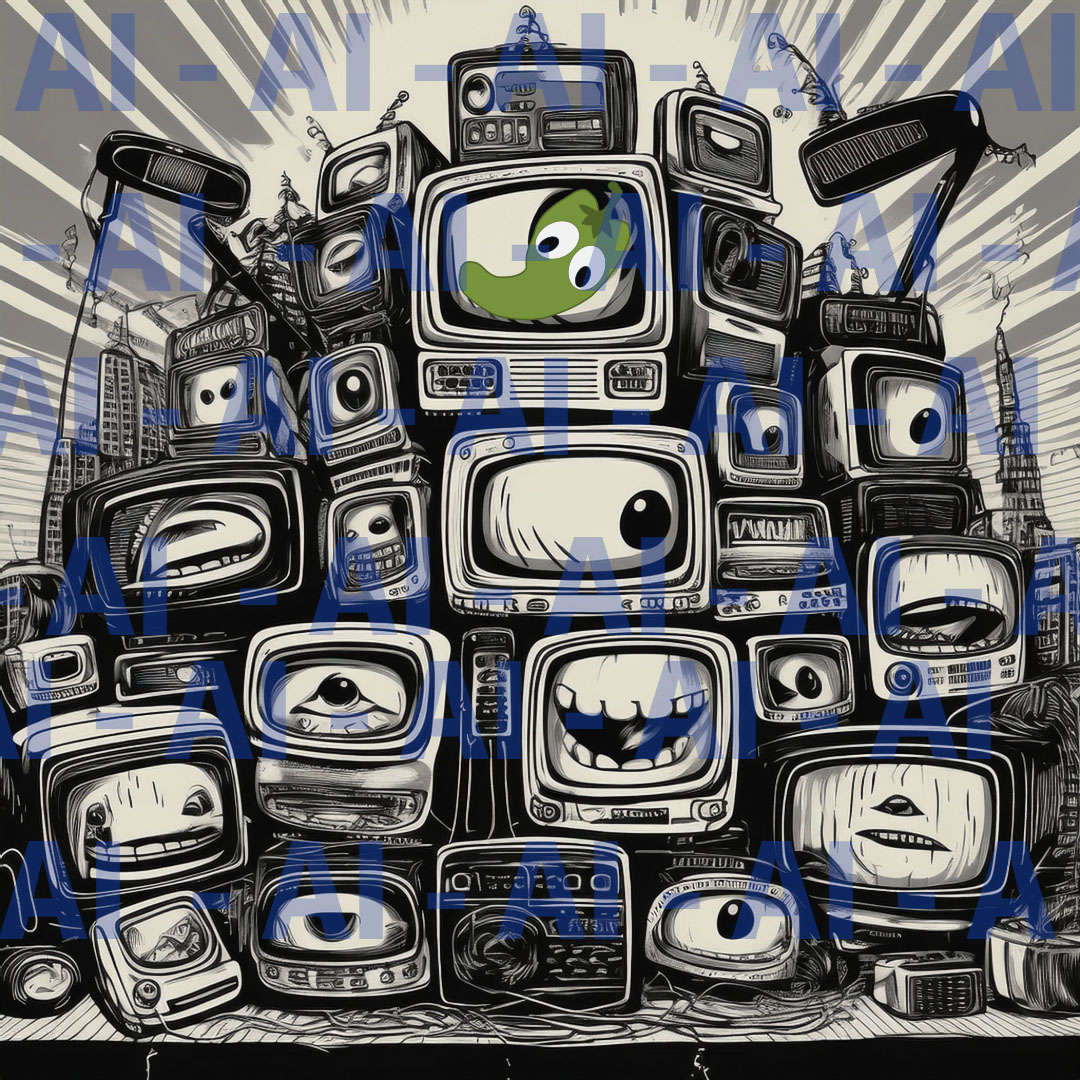
©2025 Intellyx B.V. Intellyx is an industry analysis and advisory firm focused on enterprise digital transformation. Covering every angle of enterprise IT from mainframes to artificial intelligence, our broad focus across technologies allows business executives and IT professionals to connect the dots among disruptive trends. None of the organizations mentioned in this article is an Intellyx customer. No [redacted] was used to help write this article, in any way. Except Adobe Image Express helped me make the feature illustration.