
“The plan keeps coming up again / And the plan means nothing stays the same / But the plan won’t accomplish anything / If it’s not implemented”
– Built to Spill, “The Plan” lyrics, 1999
You may have noticed a change in our positioning here at Intellyx. Where once we were the digital transformation experts, now we’re the change agent analysts.
Admittedly, digital transformation as a term was getting a little long in the tooth, but it served Intellyx well for the last 12 years, because it didn’t pigeonhole our coverage into any specific technology space. Enhancing customer experiences, business processes, operations, and overall business strategy through the lens of digital transformation is still an ongoing concern for many large enterprises.
While digital transformation never really died, we just stopped talking about it once GenAI and Agentic AI came on the scene and put the shiny new technology cart before the business outcomes horse, so to speak.
AI is either going to revolutionize how we build, manage, operate and use software forever, or the balloon of overinflated expectations will pop and leave a mess of little bits everywhere. Either way, new AI-driven products are coming along so fast now that vendors and enterprise customers seldom have enough time to react, much less strategically assess the business value they hope to achieve by adopting them.
There are so many more mission critical customer processes to support and organizational factors to consider besides AI, that we can’t afford to get distracted by shiny new things as we move forward.
Covering technology change, or the lack of it
I took the first week or so of 2026 to reflect on the many changes I’ve seen across every arena of enterprise IT as an analyst over the last ten years. Until I checked my LinkedIn profile, and realized I’ve only been doing this for seven years. Constant change has a way of compressing time like that!
So, OK, after helping vendors tell their stories of value for the last 7 years, and attending a couple thousand vendor briefings and booth visits, I’ve noticed one constant.
Vendors who set out to build a better product than their competition eventually realize that their greatest competitor for customer deals isn’t another vendor; it’s the status quo. Without a compelling justification for change, organizations are not changing at all.
Whether for fear or frugality, their enterprise IT customer base has a right to be skeptical of claims and risk-averse – burned out by endless digital transformation initiatives that are eventually abandoned, projects that exceeded budget and timeline goals, or spectacular failures and security breaches causing firefights in production.
Life at the end of the vendor funnel
Before I lived this glamorous analyst lifestyle, I was a head of marketing at an enterprise software startup, iTKO (later acquired by CA/Broadcom). My performance was largely measured by my ability to generate leads, whereas sales would be incentivized to close deals. Naturally, I wanted good traffic, but I was really looking for quality, not quantity: SQLs (sales qualified leads) of individuals who had both the will and wherewithal to buy our expensive software that were worth the sales team’s attention.
I was positioning products, running marketing campaigns, and trying to curry influence with the analyst community. I was highly motivated to get analysts to see the unique value of what we were doing, so they’d put my company in the right category, and move our dot up and to the right on the charts.
Since we were competing with the likes of HP and IBM, maintaining connection with the big analyst firms was our ante for staying on the enterprise’s vendor consideration list. We didn’t expect them to rank us as the best or validate our view of the market right away in their coverage. But if a CIO at a global bank were to ask the big analyst in our space what they thought of us, and they said “never heard of them,” now, THAT would be a dealbreaker.
That is why I brought in boutique analyst firms like Intellyx (and Jason Bloomberg’s previous firm ZapThink). The smaller firms could be more flexible, and rather than sticking to a set research agenda or giving me canned reports, they could help me tell our unique story with independent thought leadership assets on a budget.
Looking for a champion
Once we had several pieces of analyst content lodged in our resource library, we started Google ads for long-tail search terms to point to them – like 5 cents a click to appear under “tibco rv mq soa testing.”
[Unfortunately, they don’t let you target ads this directly or cheaply anymore, but generative engine optimization (GEO) offers a new route to deliver authoritative content into AI search results.]
The ads worked pretty well for traffic, but more impressively, we started seeing more of our natural inbound visitors showing up in small groups from a given company’s domain [we’ll say “GlobalBank” for instance] and immediately grabbing up several of the free analyst reports.
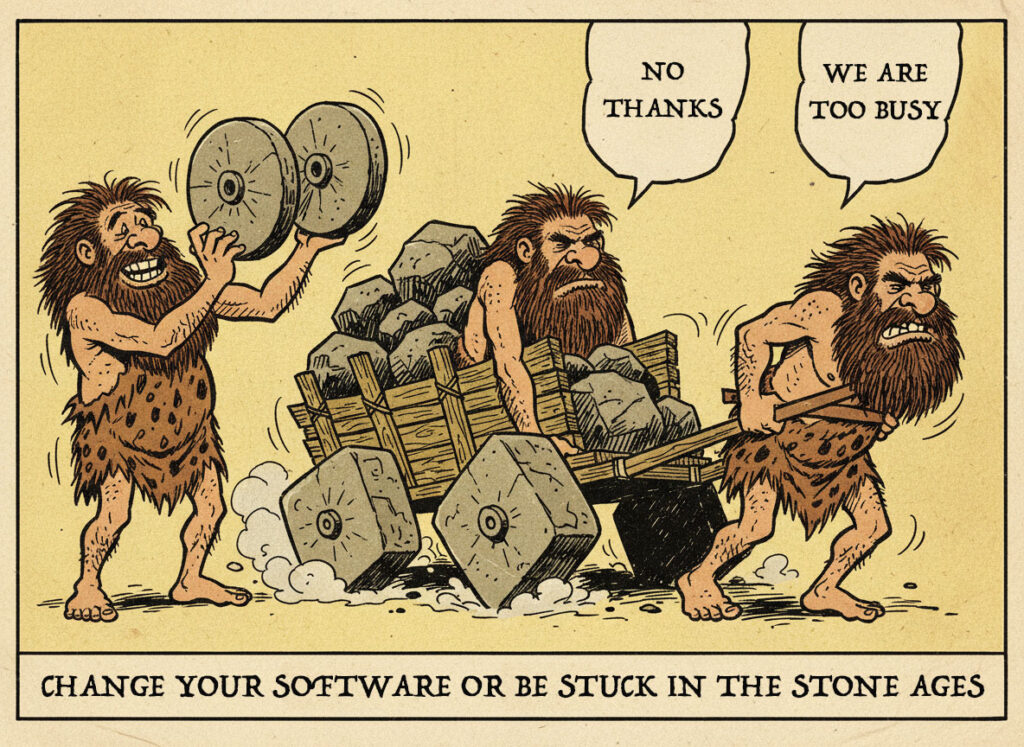
These analyst asset downloads became early indicators that GlobalBank was in the midst of a transformation, and the champions for change within that company were looking for supporting materials to understand and socialize that change within their organizations – before we even had any sales folks on site with them to show them the slide above with the cavemen and square wheels, or the iceberg.
We were generating leads, yes, but more importantly, we were driving demand. Our early understanding of each account was critical for qualifying sales-ready prospects, identifying our champions within an account, and later, accelerating their decision cycles. Educated customers were less likely to have unrealistic expectations, and more likely to succeed in implementing our software and realizing value.
Though the mechanics of marketing have evolved, this is how I got the bug to someday be an analyst, and help other vendors in my former position tell their own stories and find their own champions for change within their customers.
Fast forward to now, and we’re enjoying staying on the edge of innovation with our audience. I was going to say some more pivotal things here, but best I wrap this Cortex post up so we can send another newsletter and attend a briefing on Quantum-Safe Security. After all, we are only humans constrained by time, though we have posted an AI version of ourselves you can chat with at chat.intellyx.com.
The Intellyx Take
Intellyx is still here, and although our positioning has changed a little, we’re going to continue to provide human generated, high quality insights that connect the dots between technology and business value for our enterprise audience of IT executives, architects, and builders.
In that spirit, here’s our new boilerplate messaging. Your feedback is always welcome.
About Intellyx
Intellyx is the change agent analyst firm focused on customer-driven, technology-empowered digital transformation for the enterprise. Rather than categorizing vendors, our thought leadership distills insights across the rapidly evolving enterprise IT landscape; from agentic AI to quantum-safe security, cloud native development to modern mainframes. Our advisory helps your organization and your customers see through the hype and get beyond the fear of technology disruption to take action and realize value through change. Read and learn more at https://intellyx.com or follow them on LinkedIn.
Copyright ©2026 Intellyx B.V. As of the time of writing, Broadcom (iTKO) are current Intellyx customers, IBM are former customers, and none of the other organizations mentioned in this article is an Intellyx customer. No AI resource was used to write this article. Image source: Adobe Image Express, Gemini Firefly with edits by author.