
brain Blog Post for wavelo by eric newcomer
Every telecom bill starts with recording an event – a phone call, text message, or stream of data. Each call detail record (CDR), usage detail record (URD), or Internet protocol detail record (IPDR) eventually produces a consumption charge on a telecom bill.
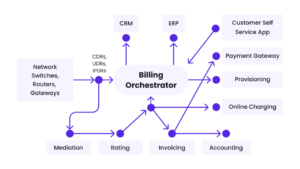 How and when a telecom billing system processes each network consumption event and creates bills has a significant impact on cost and customer service. Traditional telecom billing systems collected CDRs in files and processed them in monthly batches. But modern systems process CDRs, URDs, and IPDRs as real time events and have the flexibility to present simplified bills that are easier to understand.
Modern billing systems process network consumption events in real time so that a customer’s account is always current. Modern systems also support a variety of different billing methods – whether per call or per text, or a flat rate for a given geographical region or time period. When a customer pays for a specific amount of calls, texts, or data, the billing system has to know in real time when the limit is reached.
The challenge for both existing and new telecom companies is how best to modernize an older billing system designed to process a monthly batch of CDRs to a modern system designed to process CRDs, UDRs, and IPDRs in real time.