
SiliconANGLE article by Jason English
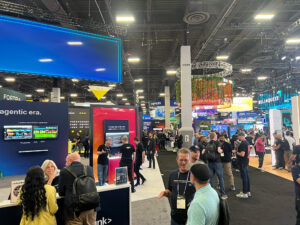 Las Vegas was hotter than hell last week, but not as hot as the market for artificial intelligence-enabled security at Black Hat USA 2026. A bandwagon of million-dollar booths for overfunded agentic security startups arose like mirages from the desert. Fortunately, there was also real value to be found amidst the AI hallucinations.
AI supply chain challenges were the topics du jour for chief information security officers and researchers comparing each other’s level of preparedness for agentic AI disruptions such as the on-off introduction of Anthropic PBC Mythos-class escape exploits, and the recent OpenAI/Hugging Face attack, and even Meta Platforms Inc. saying it did one too, just to not get left out.
“I think this incident was a really good example of exploiting the nondeterministic capabilities we already know about AI, where there’s just a lot more code and traffic generated within a quicker time period, which can hide abuses,” said Patrick Duffy, head of product at Dropzone AI Inc., which announced its new AI Threat Hunter product at the show. “Human teams could not launch a thousand investigations at the same time to respond.”
One thing that has been thoroughly disproven since last year’s autonomous security operations center craze? AI automation is still not replacing professional security expertise. The ungovernable AI cat is already out of the bag, so we’ll need AI agents to work alongside us to stop it, because we’ll always have a shortage of skilled security professionals to follow up on the unknowns of an ever-expanding threat surface.
Here were some interesting new brain wrinkles I picked up at my first Black Hat:
Orchestrating the agentic SOC
Agents in the SOC, if governed, trained and employed correctly, can take a lot of work off the human security analyst’s plate, freeing up more time for critical investigations and strategic security architecture thinking, but there are many ways to get there.
Rather than keying off of alerts and incidents, Nebulock Inc. builds a behavioral world-model graph of an enterprise that overlays existing security information event management, information technology security management and alerting tools to conduct “hunt-first” agentic detections and investigations. Agent fleets can be triggered to respond autonomously to events such as patches or new CVEs, or a security analyst’s natural language request to follow up on a hypothesis informed by coverage gaps they are seeing in their security posture command center.
Huntress Labs Inc. provides a 24/7 managed platform used by hundreds of thousands of individual jacks-of-all-trades, service providers and mid-sized companies. Their in-context training, support experts and SOC workflow automation help customers that would have a difficult time covering every aspect of security.
“We try not to overuse AI buzzwords here,” said Aimee Simpson, director of product marketing at Huntress. “We do have Athena, an agentic investigator made of different subagents that are doing different tasks, compiling signals, investigations, writing incident reports, to take some of the workload from our SOC, but our customers care about results. If the agent is not confident in its findings, that still goes straight to our expert human analysts – and we’re definitely still hiring them.”
For a newer vendor on the market, Strike 48 brings a surprisingly broad agentic SecOps platform with multi-platform SOC, network operations center and DevOps connectivity. It has more than 300 MCPs under the hood, allowing its agents to resolve security issues…
Read JE’s whole event recap in SiliconANGLE here: https://siliconangle.com/2026/08/09/finding-big-money-ai-smaller-world-security-black-hat-usa-2026/
Click here to read the article in Chinese.